
Dental Crowns In Edgware
A dental crown — sometimes called a cap or helmet — is one of the most versatile and durable restorations in modern dentistry. Whether your tooth has been broken, heavily decayed, cracked, or weakened by a very large filling, a crown can fully encase what remains of the tooth above the gum line, rebuilding its shape, restoring its strength, and protecting it from further damage. At Stag Lane Dental, we provide carefully crafted crowns that look and feel completely natural — helping you eat, speak, and smile with confidence.
Crowns are also used to improve the appearance of teeth that are severely discoloured or misshapen, and play an important role in protecting teeth that have been identified as having an early crack — helping to prevent the tooth from splitting further. If you have had root canal treatment, your dentist may also recommend a crown to protect and strengthen the treated tooth for the long term.
Our experienced dental team will always discuss all available treatment options with you before proceeding, ensuring you feel fully informed and confident in your decision.
What Is a Dental Crown?
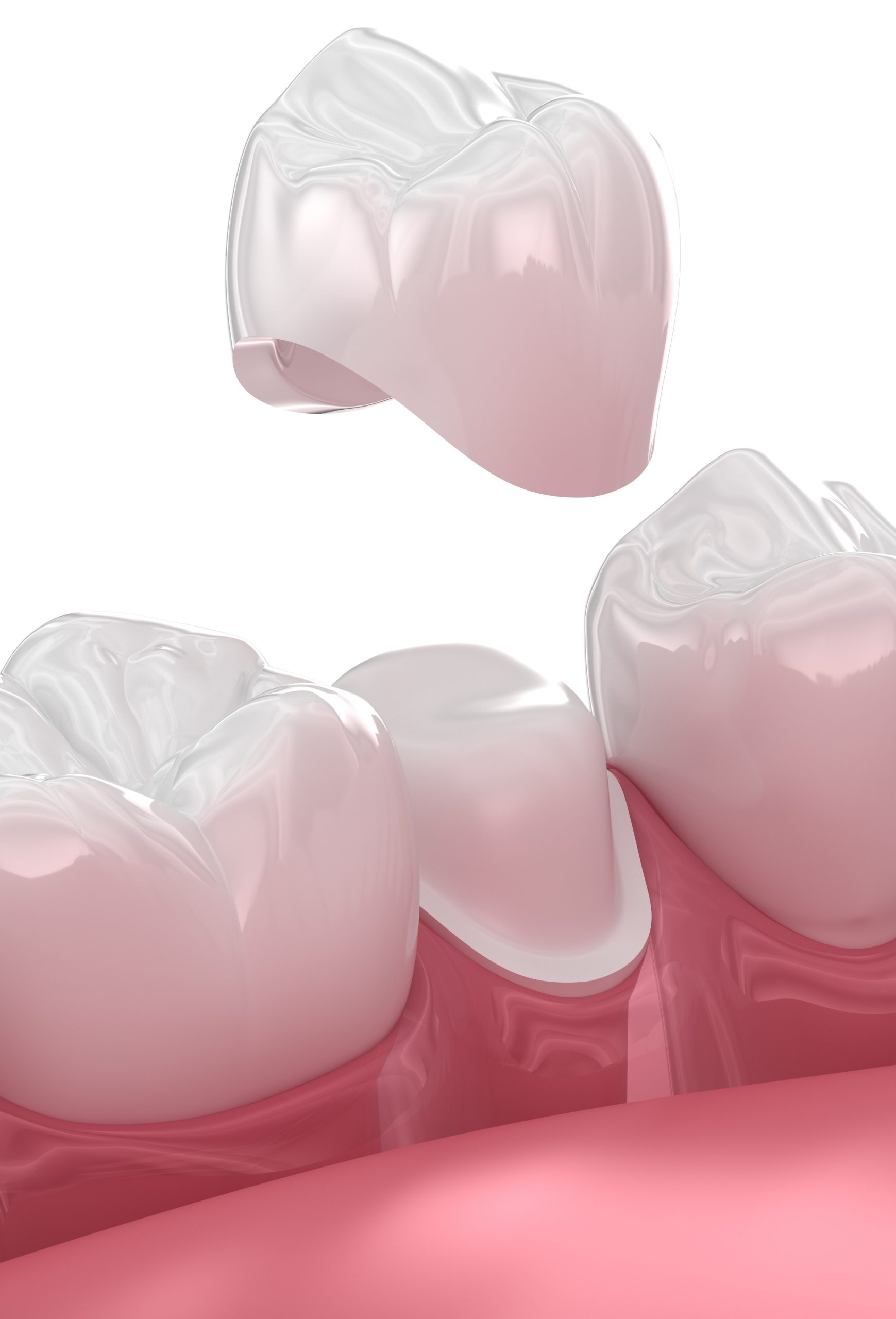
A dental crown is a custom-made restoration that fits precisely over a prepared tooth, covering it entirely from the gum line upwards. It is permanently bonded in place and, once fitted, functions exactly like a natural tooth. The crown protects the remaining tooth structure beneath it from decay, fracture, and further deterioration, whilst restoring the tooth to its original shape, size, and appearance.
Modern crowns are fabricated from high-quality dental materials — most commonly all-ceramic or porcelain-bonded-to-metal — and are individually designed to match the colour, shape, and contour of your surrounding teeth. The result is a restoration that blends seamlessly into your smile and is virtually indistinguishable from a natural tooth.
When Is a Dental Crown Needed?
A dental crown may be recommended in a number of clinical situations. Common reasons for needing a crown include:
- A tooth that has been broken or fractured and cannot be restored with a filling alone
- Significant tooth decay that has destroyed too much of the tooth structure for a filling to be effective
- A tooth that has been weakened by a very large existing filling and is at risk of cracking
- An early crack in a tooth — a crown can hold the tooth together and prevent it from splitting
- Following root canal treatment, to protect and seal the treated tooth
- A severely discoloured or misshapen tooth where cosmetic improvement is the primary goal
- As part of a dental bridge, where crowns are placed on the teeth either side of a gap to support a false tooth
- To secure a dental implant restoration — a crown is placed on top of the implant fixture
If you are unsure whether a crown is appropriate for your tooth, our team will assess your situation thoroughly and explain all available options clearly before any treatment is recommended.
Types of Dental Crowns Available
We offer several crown materials at Stag Lane Dental, each with distinct advantages. The most suitable option for you will depend on the location of the tooth, the amount of remaining tooth structure, functional demands, and your aesthetic priorities.
All-Ceramic Crowns
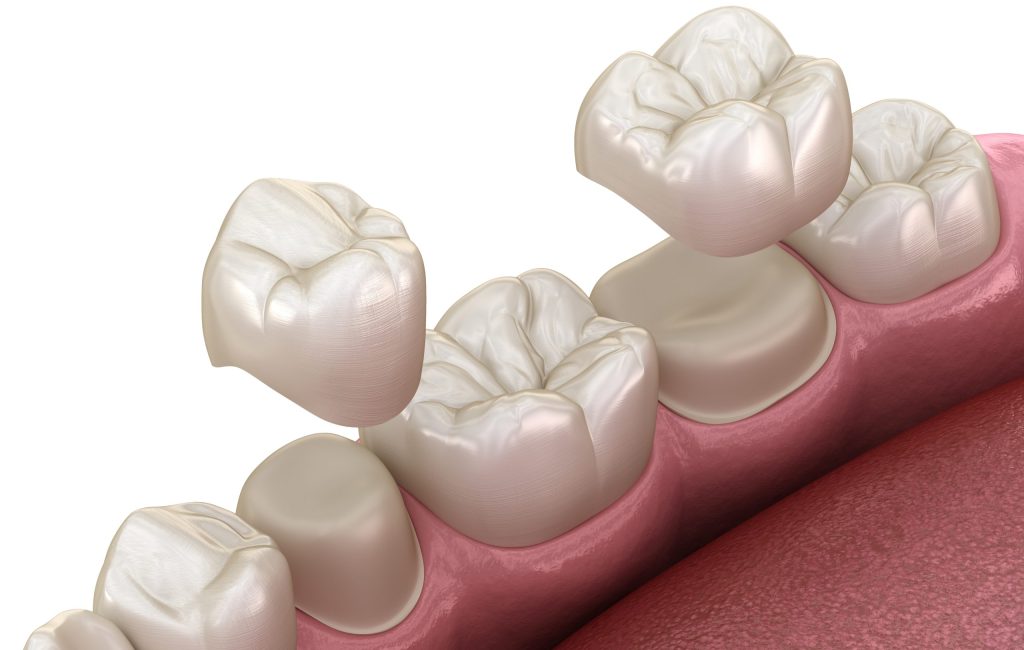
All-ceramic crowns are made entirely from high-strength dental porcelain or zirconia, and offer the most natural and lifelike appearance of all crown materials. They are an excellent choice for front teeth and visible areas of the mouth, where aesthetics are the primary consideration.
Key advantages of all-ceramic crowns:
- Outstanding aesthetic result — the most natural-looking crown available
- Built from multiple layers of tooth-coloured porcelain to mimic the translucency of natural enamel
- Metal-free — no dark line at the gum margin, which can occur with older porcelain-bonded crowns
- Biocompatible and suitable for patients with metal sensitivities
- An ideal choice for front teeth and the smile zone
Porcelain-Bonded-to-Metal (PBM) Crowns
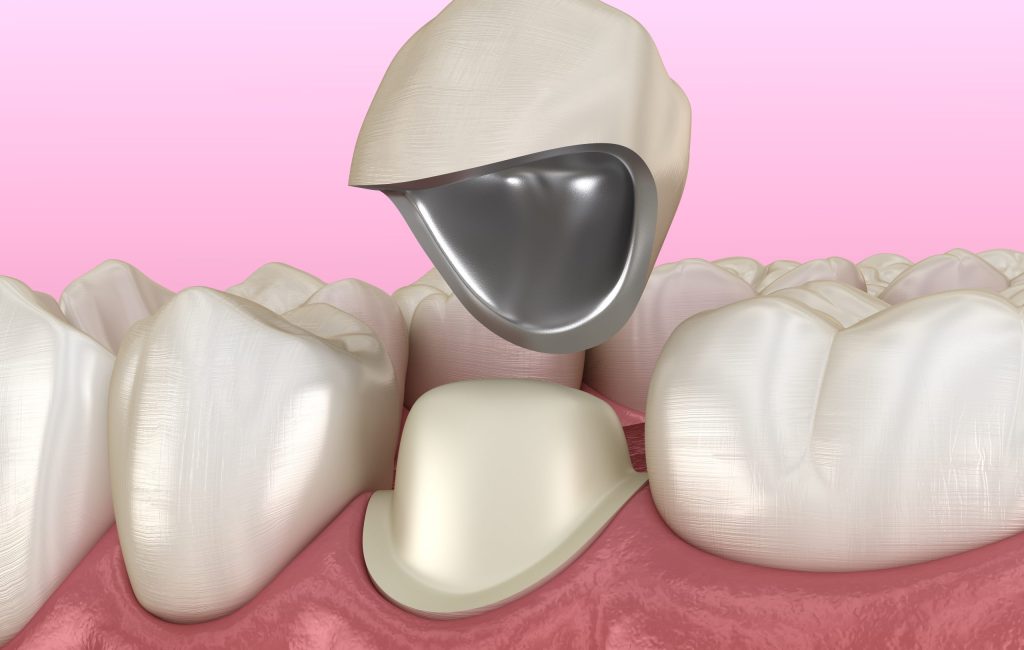
Porcelain-bonded-to-metal crowns combine a metal substructure with an outer layer of tooth-coloured porcelain. The metal core provides exceptional strength and durability, making this crown type particularly well suited to back teeth, which must withstand the considerable forces generated by chewing.
Key advantages of porcelain-bonded-to-metal crowns:
- Superior strength — the metal core can withstand high biting forces
- Aesthetic outer porcelain layer provides a natural appearance
- Long clinical track record — a well-established and reliable restoration
- Particularly suitable for back teeth where strength is the primary consideration
- A durable and cost-effective option for complex restorations
We will discuss both options with you at your consultation and recommend the most appropriate crown for your clinical needs, the location of the tooth, and your aesthetic goals.
Fees:
- Crowns from £800
- Recement Crown from £95 (Simple) / £120 – £150 (Complex)
The Dental Crown Procedure
Having a dental crown at Stag Lane Dental is a straightforward process that typically takes place over two appointments. Here is what you can expect:
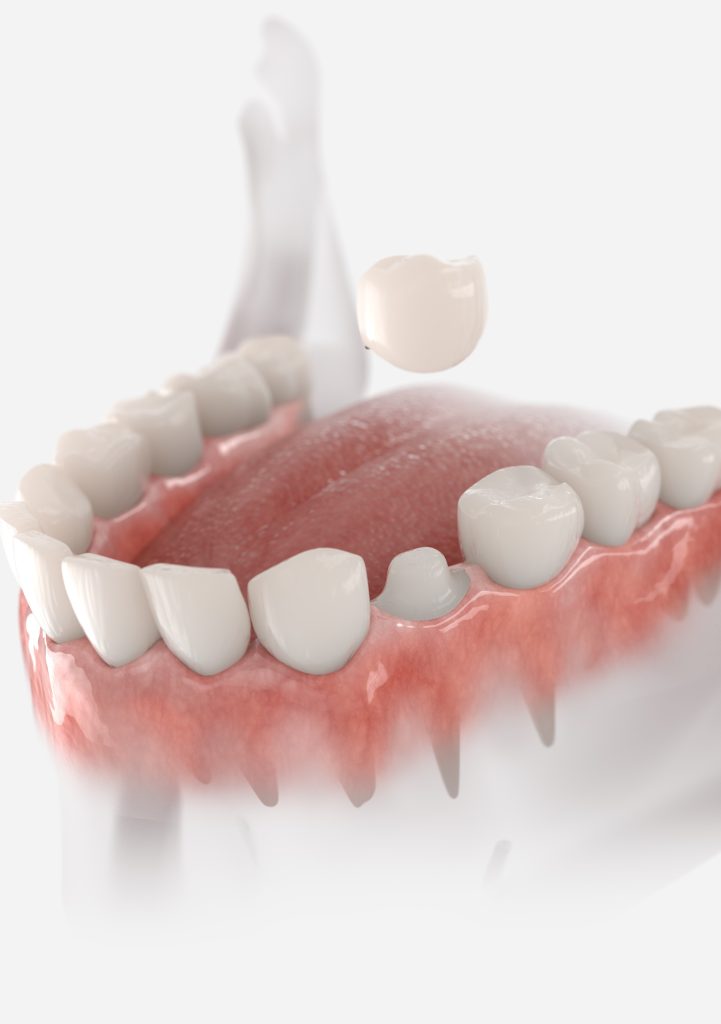
- Appointment 1 — Examination and preparation: We assess the tooth and take digital X-rays if needed to evaluate the extent of the damage. A local anaesthetic is administered, and the tooth is gently shaped to create room for the crown. An impression of the prepared tooth and surrounding teeth is taken and sent to our dental laboratory. A temporary crown is placed to protect the tooth while your permanent restoration is being crafted
- Between appointments: Your bespoke crown is precision-made in a dental laboratory from your impressions, ensuring an accurate fit and a natural appearance. This typically takes one to two weeks
- Appointment 2 — Fitting and bonding: The temporary crown is removed and your permanent crown is carefully checked for fit, shape, colour, and bite before being permanently bonded in place using a strong dental adhesive. We make any fine adjustments needed to ensure a completely comfortable and natural-feeling result
Most patients find the procedure comfortable throughout. Because local anaesthetic is used during tooth preparation, you should feel no pain — only mild pressure. Some sensitivity around the tooth is normal in the days following each appointment and typically resolves quickly.
Our Approach to Crown Treatment
At Stag Lane Dental, we follow a conservative approach to all dental treatment — which means we will only recommend a crown when it is genuinely the most appropriate clinical option for your tooth. We will always explain your diagnosis, the proposed treatment, any available alternatives, and the likely outcomes before proceeding. This is in keeping with GDC guidelines on patient-centred care.
We understand that dental treatment can feel daunting, and we take the time to ensure every patient feels comfortable, informed, and at ease before anything proceeds. If you have any concerns about your treatment — including costs, the number of appointments involved, or what to expect during recovery — please do not hesitate to ask.
Our crowns are made to the highest standards by skilled dental technicians, and we take considerable care to ensure the shade, shape, and size of your crown integrates naturally with your existing teeth and your overall smile.
Book Your Dental Crown Consultation in Edgware
If you have a broken, cracked, heavily filled, or weakened tooth, do not put off seeking advice. A crown fitted at the right time can save a tooth that might otherwise be lost. Call Stag Lane Dental on 0208 952 0839 to book your consultation, or contact us online and a member of our friendly team will be in touch.
Both new and existing patients are welcome. Your oral health and your long-term comfort are our priority. Ask us about our 0% dental finance solutions, designed to make high-quality dental care accessible and budget-friendly.

FAQ's
Tooth preparation for a crown is carried out under local anaesthetic, so you should feel no pain during the appointment — only mild pressure or vibration from the dental instruments. It is normal to experience some sensitivity or mild discomfort around the tooth in the days following preparation, particularly to temperature. This usually settles within a few days. If you experience persistent or worsening pain, please contact us promptly.
In most cases, yes. Preparing a tooth for a crown involves reshaping it, which requires the area to be numbed to ensure your comfort. An exception is when the tooth has already been root-treated and has no living nerve tissue, in which case an anaesthetic may not be necessary. Your dentist will always discuss this with you before beginning.
With proper care and regular check-ups, dental crowns can last 10 to 15 years or longer. Longevity depends on the material used, the location of the tooth, your oral hygiene habits, and whether you grind or clench your teeth. We will monitor your crown at every check-up and advise you well in advance if replacement is ever needed.
Yes. Modern dental crowns — particularly all-ceramic options — are designed to match the colour, translucency, shape, and size of your natural teeth with great precision. Our dental technicians take care to ensure every crown integrates seamlessly with your surrounding teeth. In most cases, a crown is virtually indistinguishable from a natural tooth.
Yes — the natural tooth root beneath the crown remains susceptible to decay, particularly at the margin where the crown meets the tooth at the gum line. This is why maintaining excellent oral hygiene around the crown and attending regular check-ups is so important. We use X-rays at routine appointments to monitor the tooth beneath the crown for any early signs of decay.
It is uncommon, but crowns can occasionally become loose or detach — usually as a result of the cement weakening over time, decay beneath the crown, or accidental trauma. If your crown feels loose or comes off, contact us as soon as possible. Keep the crown safe and do not attempt to reattach it yourself using household adhesives. In many cases, a crown that has come off can simply be recleaned and rebonded.
For a minor surface crack, a filling, bonding, or onlay may be sufficient to stabilise the tooth. However, for deeper or more significant cracks — particularly those extending towards the root — a crown is usually the most appropriate option, as it holds the tooth together under biting forces and prevents the crack from propagating further. We will assess the extent of any crack carefully before making a recommendation.
Dental crowns at Stag Lane Dental are available from £750 per tooth. The exact cost depends on the type of crown material selected and the complexity of the individual case. Full pricing is provided at your consultation. To book an appointment or find out more, call us on 0208 952 0839 or use our online enquiry form.
If you would like to find out more about Dental Crowns in Edgware or the surrounding areas: